
Reflection
When PRT Met My Hypochondriac Part
A reflection on what happened when a training about pain accidentally activated the part of me that is extremely talented at worrying about physical symptoms.
When professional development becomes a potential threat
I had been really enthusiastic about the PRT training. I was learning loads, enjoying it and thinking about how useful it could be in my work.
Then the instructor mentioned that working in this area means being exposed to a lot of people in physical pain.
A part of me immediately replied: WHAT? DO YOU MEAN I COULD START GETTING EVERYONE’S PAIN?
Because I have a hypochondriac part, and it is remarkably good at mimicking other people’s symptoms. During one demonstration, someone was talking about pain in her arm and shoulder, and while I listened, I could feel pain running up my own wrist and arm.
At first I was curious. Huh. That’s interesting.
Then another part clocked it.
Oh my God. You just copied her sensation. What if I start taking on clients’ pain?
The course had apparently been moved from Interesting Professional Development to Potential Threat to Connie’s Body.
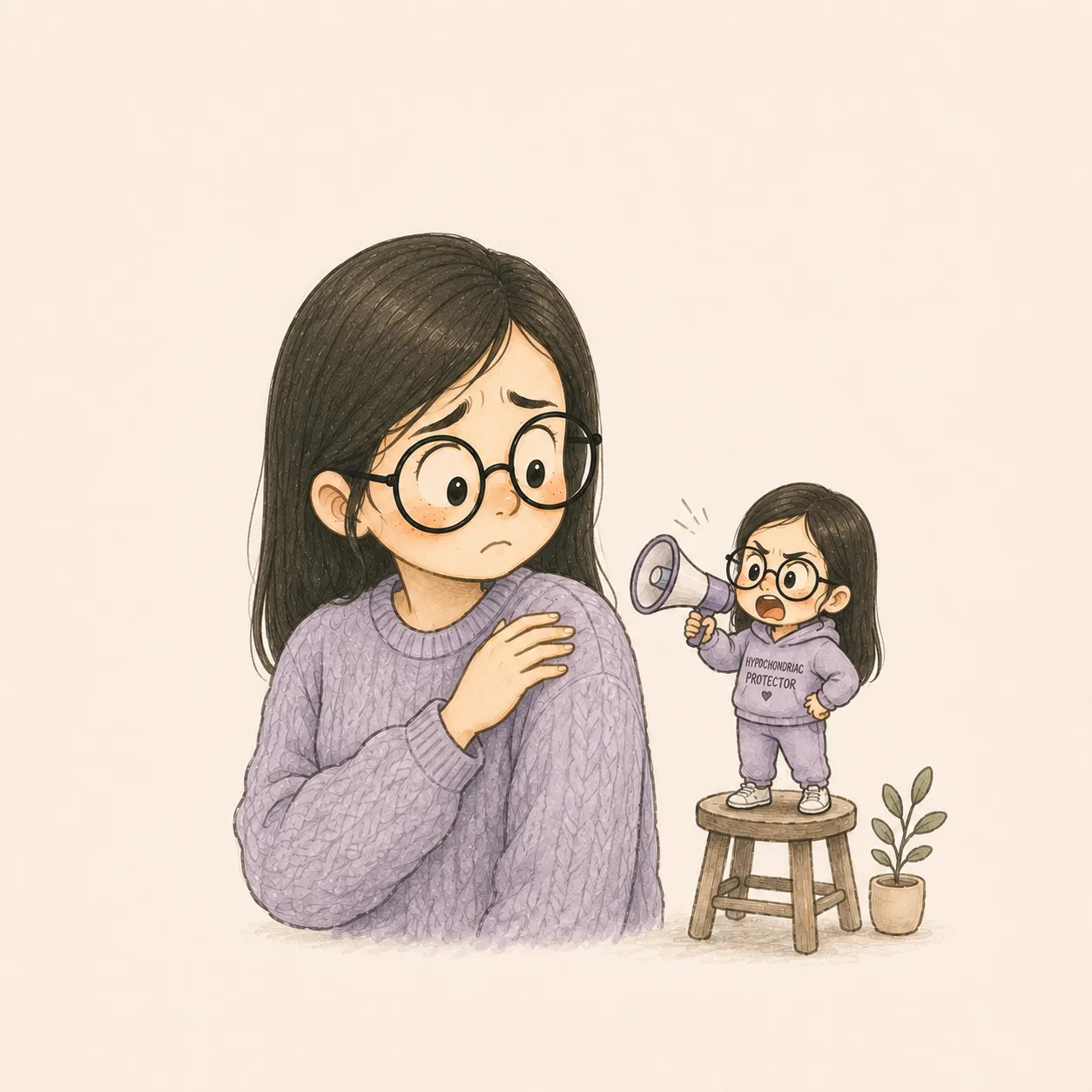
A PRT-IFS mashup
In the practice group, we ended up doing what I can only describe as a PRT-IFS mashup. Instead of reassuring the part or telling it that it was irrational, I let it speak while we stayed curious about what was happening in my body.
It had a very firm position:
Emotional pain? Fine. I’m used to it now. Physical pain? ABSOLUTELY NOT! I am not going that far. I didn’t sign up for this! This is not my bag!!!!
And then came the laughter.
Apparently grief, anxiety, trauma and shame were acceptable. But somebody mentions a shoulder and this part is reconsidering the whole career.
The more I let it speak, the more theatrical it became. At one point I joked that if I read the DSM-5, I'd think I had everything.
And its logic made sense. It had noticed that my body sometimes produced sensations similar to the ones I was hearing about. From its point of view, this clearly required immediate action.
When humour becomes part of the work
We were still doing PRT and tracking sensations, but as the amusement came in, the experience became lighter. My practice partner encouraged me to notice that too.
In PRT, positive affect can help the nervous system register safety alongside fear or discomfort. Here, we didn’t have to manufacture it. The humour emerged naturally from the sheer theatrics of the part.
I wasn’t trying to get rid of the protector or convince it that it was wrong. I could understand what it was protecting me from while also appreciating the absurdity of the whole situation.
I have never laughed so hard in a session in my life.
Sometimes PRT involves somatic tracking, safety reappraisal and graded exposure.
And sometimes it turns into a PRT-IFS mashup where a hypochondriac protector is given a megaphone.